





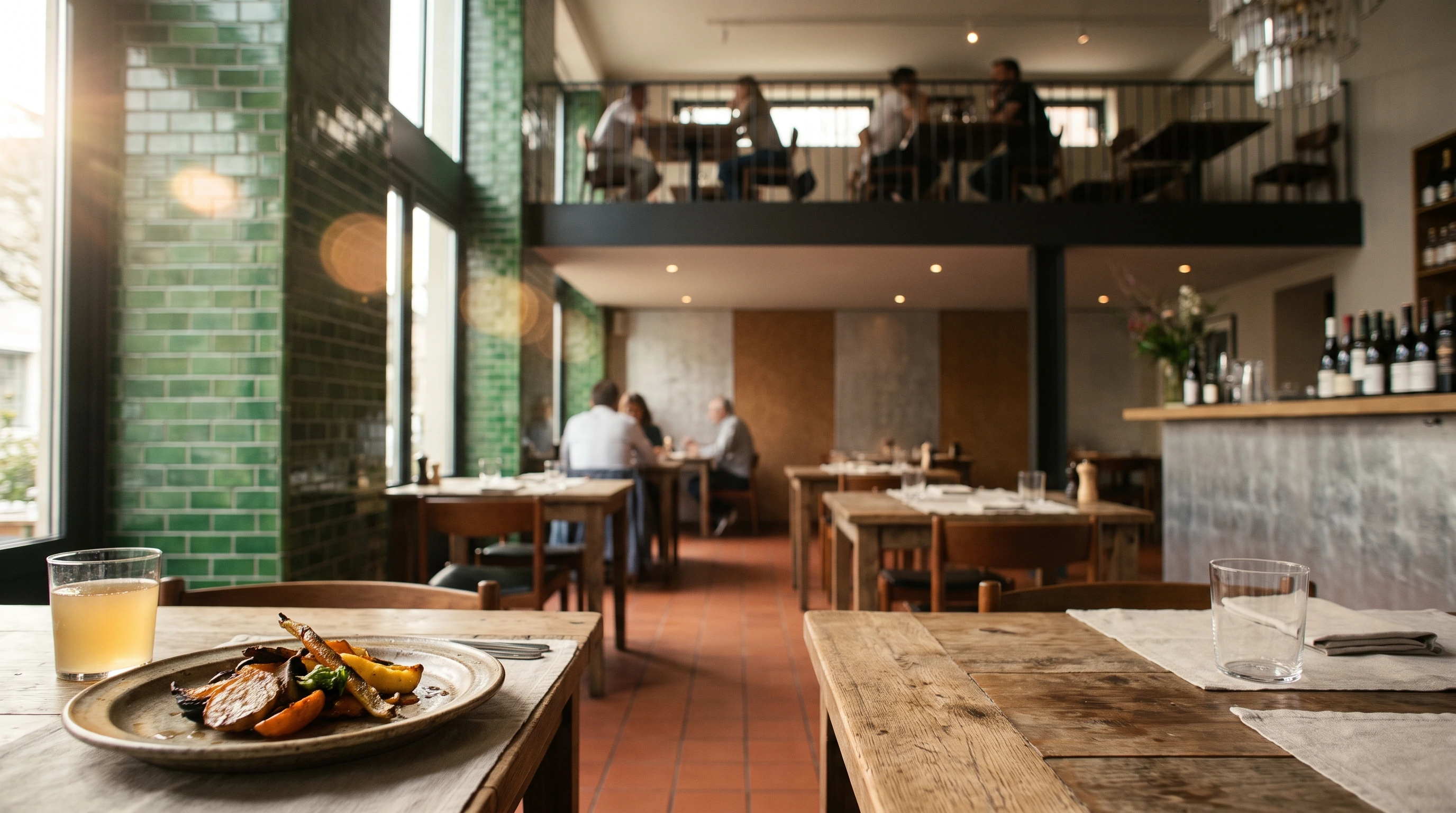
In the age of Instagram stories and TikTok reels, the visual identity of a restaurant can be as decisive as the menu itself. Designers are no longer content to hide behind the kitchen; they craft spaces that command a scroll, a share, and a reservation. The result is a market where the architecture of a venue is discussed with the same fervour as its signature dish, and where a well-timed photograph can launch a brand into global consciousness.
Photogenic ambition is evident in Memola Estúdio’s Casa Baruk in São Paulo, where terracotta and green tiles create a ceramic façade that filters light and frames the street view (Contemporist). The three-level layout, complete with a mezzanine, reads like a visual menu that invites diners to linger before they even sit. Across the Atlantic, OMA’s Oberon restaurant inside New Museum’s lobby adopts a different tactic: a silver-painted cork shell that blends into the industrial surroundings, deliberately low-key to reward the visitor who discovers it (Associatednewsagency; Architecturedigest). Both projects illustrate how designers either amplify visual appeal for social media or hide the experience behind a subtle envelope, catering to divergent brand strategies.
Noise, once an afterthought, now sits at the centre of the brief. Diners increasingly cite acoustic comfort as a make-or-break factor, prompting architects to integrate sound-absorbing panels, soft furnishings and spatial zoning. While the sources do not name a specific consultant, the trend is clear: a quiet, intimate soundscape is as prized as a perfectly plated entrée.
Repurposing heritage structures has become a design shorthand for authenticity. OMA’s jewel-box Oberon occupies a former museum lobby, turning a civic space into a culinary enclave without erasing its institutional memory. Similarly, Huset on Svalbard pushes the envelope by situating fine dining at the planet’s edge, where the stark Arctic landscape becomes part of the interior narrative (Wallpaper). These conversions demonstrate how adaptive reuse adds layers of story, turning former factories, banks or even museum lobbies into destinations that feel both historic and contemporary.
Sustainability has moved from niche to norm, with reclaimed timber, recycled glass and natural textiles now expected in high-end fit-outs. Casa Baruk’s use of locally sourced terracotta and green tiles reflects a material palette that honours Brazil’s building traditions while reducing carbon impact (Contemporist). Oberon’s cork cladding, a renewable resource, not only softens the acoustic environment but also signals an eco-conscious ethos (Architecturedigest). In Mumbai, the Art Deco-inspired Hearth weaves nostalgia with sustainable craftsmanship, using period-appropriate finishes that echo the city’s colonial past while employing responsibly sourced fabrics (Harpersbazaar In).
The “no-threshold” philosophy-where the street, lobby and dining room flow without visual or psychological barriers - is gaining traction as operators seek broader demographic reach. Run For The Hills’ Wolves of Tokyo in London exemplifies this approach, with a seamless transition from the outdoor terrace to the two-storey interior, reinforced by a unified branding language that feels inevitable rather than imposed (Designweek; Creativeboom). Hearth similarly blurs the line between narrative and space, inviting guests to move through memory-laden zones that feel like extensions of the menu itself (Harpersbazaar In).
All these design ambitions come at a price. In 2026, a full-fit interior in London can cost upwards of £2,500 per square metre, while comparable projects in New York and Singapore hover around $3,200 and S$4,500 respectively, reflecting the premium placed on bespoke materiality, acoustic engineering and adaptive reuse. Yet the return on that investment is increasingly measurable: venues that achieve a distinct visual identity often see a spike in online mentions, reservation traffic and media coverage, confirming that in today’s competitive landscape, space can be the most compelling dish on the menu.
Yum Opinion: As diners scroll past endless options, the restaurants that win will be those whose walls, light and sound tell a story as compelling as the plate in front of them.