


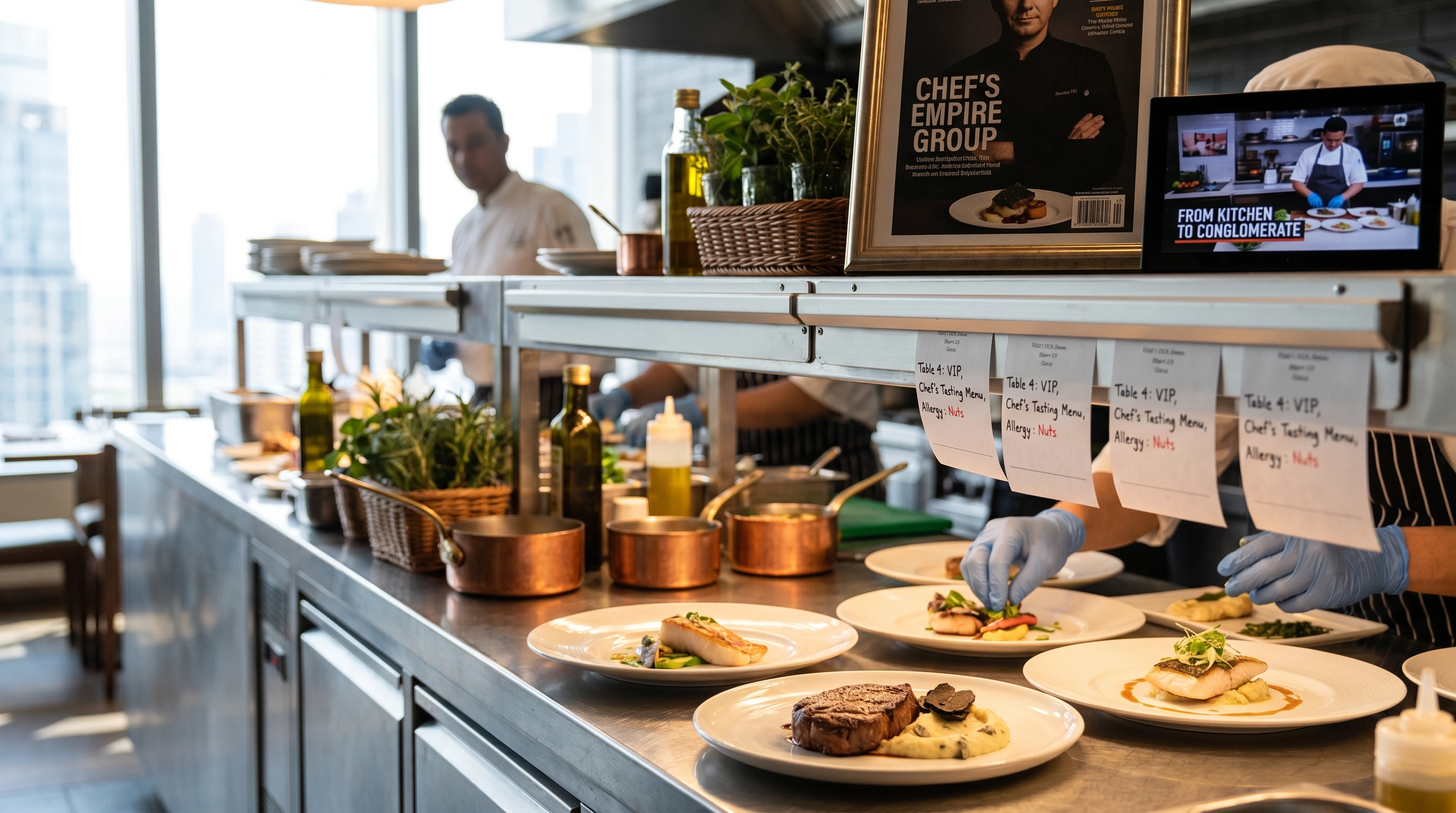

In the past decade the notion of a chef has stretched far beyond the stove. A single name now commands television studios, product shelves, cloud-kitchen networks and a legion of investors. This transformation is not limited to one continent; it is a worldwide shift that sees culinary talent leveraged as a brand asset worth billions.
Traditional chefs built reputations on Michelin stars and restaurant reviews, but media-first personalities have taken a different route. Tom Colicchio, once celebrated for his role in shaping the American restaurant scene, now boasts a fifteen-fold return on a tech venture he funded, illustrating how culinary credibility can seed high-growth investments (Fortune). By contrast, chefs who remain restaurant-centric, such as Alain Ducasse, continue to rely on a single flagship venue to anchor their reputation.
Licensing deals have become the financial engine of many chef empires. Cookbooks, once a primary revenue stream, now serve as marketing tools that drive sales of cookware, appliances and even grocery ranges. The looming $40 billion Unilever-McCormick merger, reported by Confectionerynews, underscores how major food manufacturers are eager to lock in chef-endorsed product lines, betting that a celebrity’s seal of approval can lift margins across global shelves.
Scaling without the expense of brick - and - mortar has been made possible by ghost and cloud kitchens. Rebel Foods, the Indian-born cloud-kitchen giant, has built a worldwide network that lets chefs launch virtual brands in minutes, bypassing the capital-intensive process of opening a physical restaurant (OpenMagazine). This model not only multiplies revenue streams but also creates a data-rich environment where chefs can test concepts across markets before committing to permanent locations.
With great brand power comes heightened scrutiny. New Zealand’s Vaughan Mabee, once hailed as a world-class chef, saw his accolades threatened after allegations of workplace bullying emerged, prompting the Milan-based Best Chef Awards to reconsider his honours (NZ Herald). The swift removal of his television programmes from broadcasters illustrates how reputational damage can instantly erode a multi-platform empire.
Private equity’s appetite for culinary brands has surged alongside these trends. Investors view chef-led groups as ready-made platforms for rapid international expansion, a view reinforced by the Unilever-McCormick talks that have sparked debate over valuation and strategic fit. While the deal promises to reshape the global food landscape, it also highlights the tension between creative control and shareholder expectations.
Not all chef empires are built by solo stars. The power-couple model, exemplified by John and Elise Russ of Clementine in San Antonio, shows how a shared vision can blend fine-dining credibility with community-focused hospitality (EINPresswire). Their partnership demonstrates that brand equity can be amplified when culinary talent is paired with complementary expertise, creating a holistic guest experience that extends beyond the plate.
Across continents, the chef-as-brand phenomenon is redefining what it means to be a culinary professional. From licensing deals that flood supermarket aisles to cloud-kitchen networks that turn a recipe into a global franchise, the stakes are higher than ever.
Yum Opinion: the financial and cultural influence of chef brands now shapes consumer habits, investment flows and the very definition of hospitality worldwide.